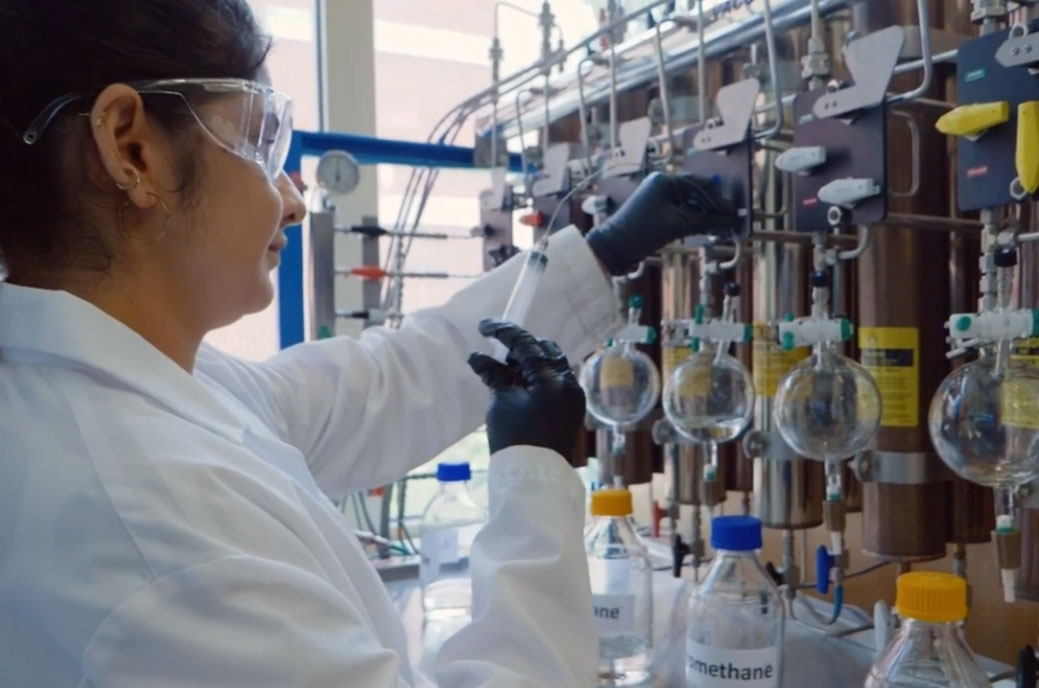
Take a virtual tour of our labs and listen to Prof. Shatruk discussing our research projects and the skills that students acquire in the group.
Watch Lab Tour on YouTube →Synthesis
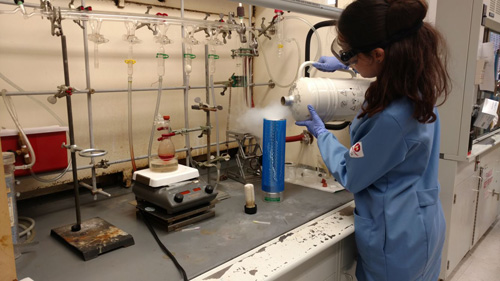
Schlenk Lines
Preparing liquid nitrogen for Schlenk line traps. Our Schlenk lines enable air-free synthesis and manipulation of oxygen- and moisture-sensitive compounds.
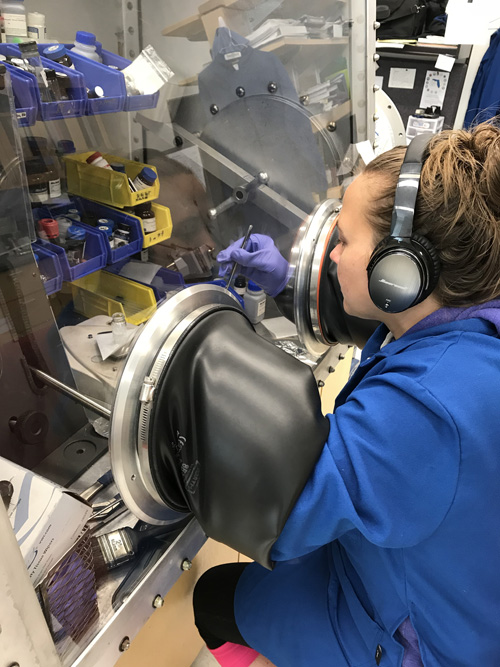
Glovebox
Weighing air-sensitive elements inside one of four lab gloveboxes. Our inert atmosphere gloveboxes maintain oxygen and moisture levels below 1 ppm.
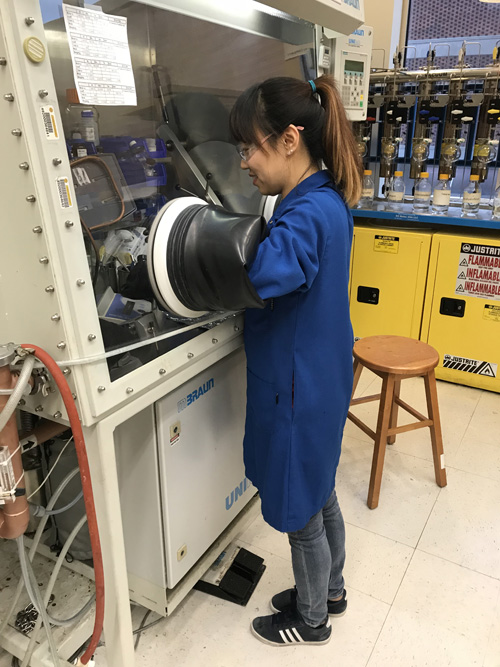
Glovebox Operations
Preparing to remove compounds from a glovebox. We have multiple gloveboxes for different synthesis and characterization needs.
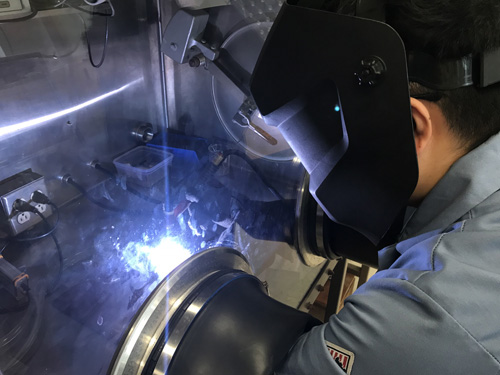
Arc-Melting
Melting a sample in the high-temperature synthesis glovebox. Arc-melting allows us to synthesize intermetallic compounds at extremely high temperatures.
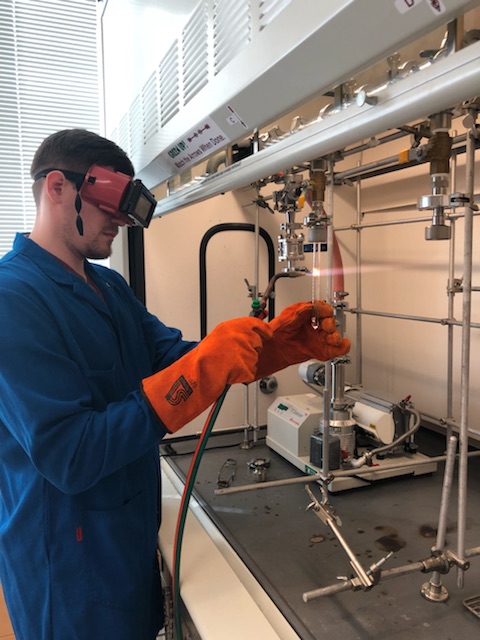
Tube Sealing
Sealing a sample in a tube under vacuum to keep oxygen out of a reaction. Sealed tube reactions enable synthesis at controlled atmospheres and high temperatures.
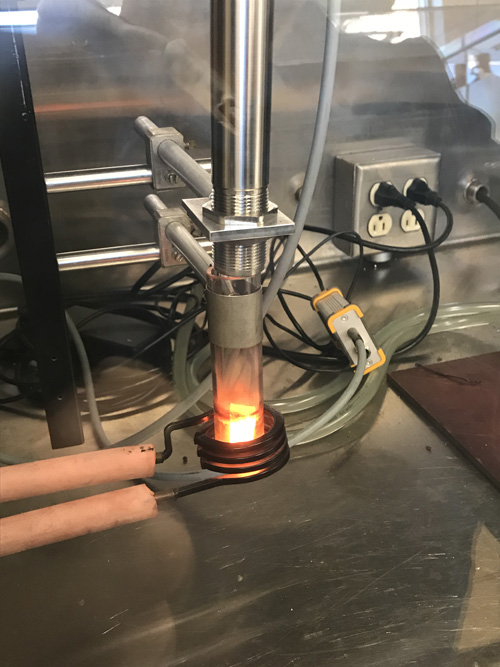
Induction Furnace
A sample being heated through induction (also known as RF melting). Induction heating provides rapid, controlled heating for high-temperature synthesis.
Crystallography
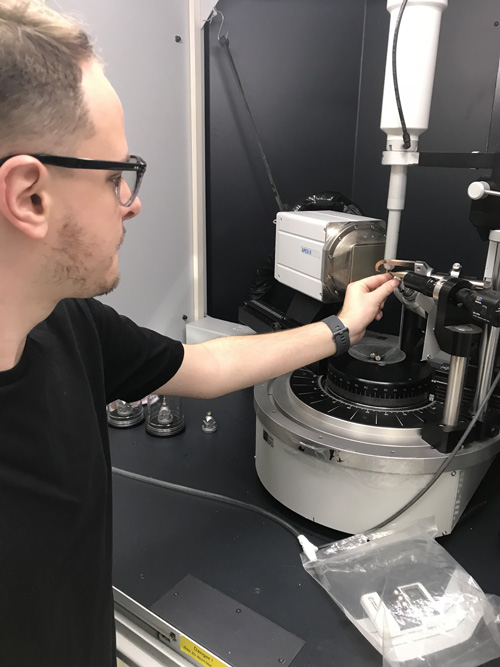
Single-Crystal Diffractometer
Mounting a crystal on the Bruker single-crystal diffractometer (Departmental access). This instrument provides atomic-resolution structural information.
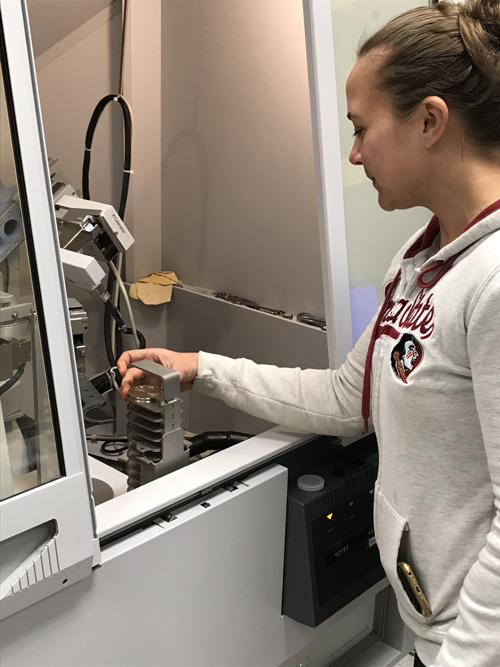
Powder Diffractometer
Mounting a sample for powder X-ray diffraction on the Panalytical (Departmental access). PXRD allows us to identify phases and assess sample purity.
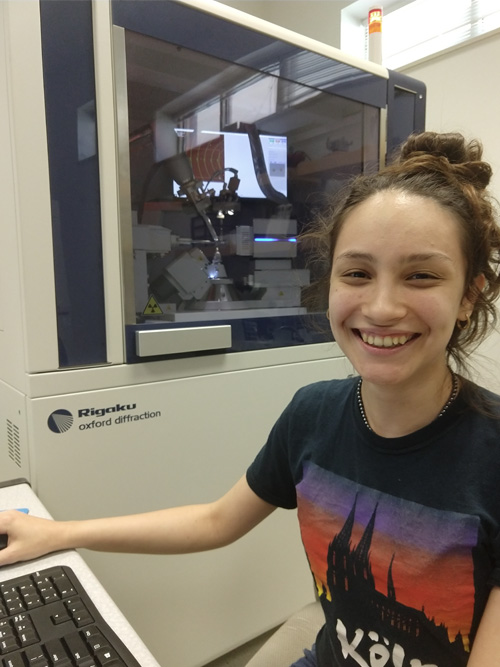
Rigaku Single Crystal Diffractometer
Collecting a crystal structure on the brand-new Rigaku single crystal diffractometer (Departmental access). State-of-the-art instrumentation for crystallographic studies.
Magnetism
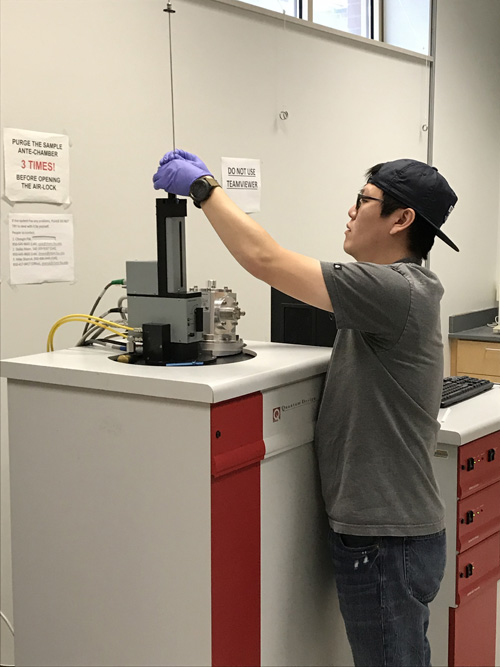
SQUID Magnetometer
Loading a sample into the SQUID (Departmental access). The Superconducting Quantum Interference Device magnetometer measures magnetic properties with exceptional sensitivity from 1.8 to 400 K.
Spectroscopy
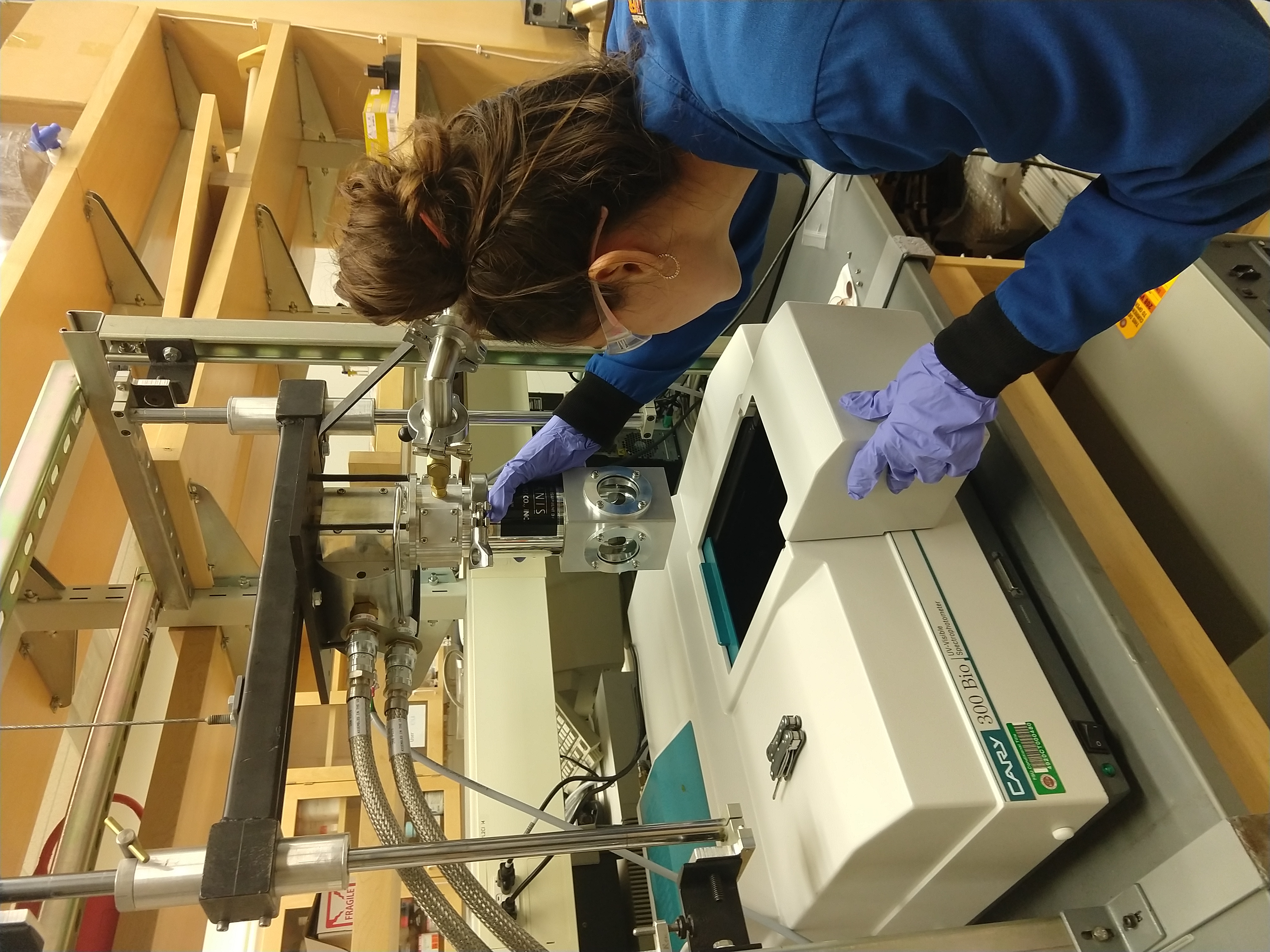
Low-Temperature UV-Vis Spectrometer
Loading a sample into the Cryo-UV-vis spectrometer. This instrument enables optical spectroscopy measurements at cryogenic temperatures to study electronic transitions and photoswitching phenomena.
Theory
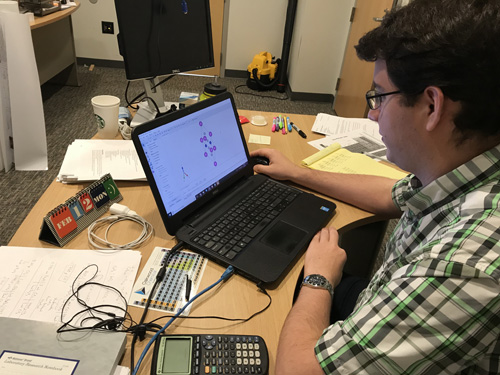
Density Functional Theory
Performing DFT-based calculations. We use computational methods to predict and understand electronic structure, magnetic properties, and chemical bonding in functional materials.
Highlights

Rachel Receives DADE Award
June 2026
Rachel Perez has received the Dean's Award for Doctoral Excellence in support of her PhD research
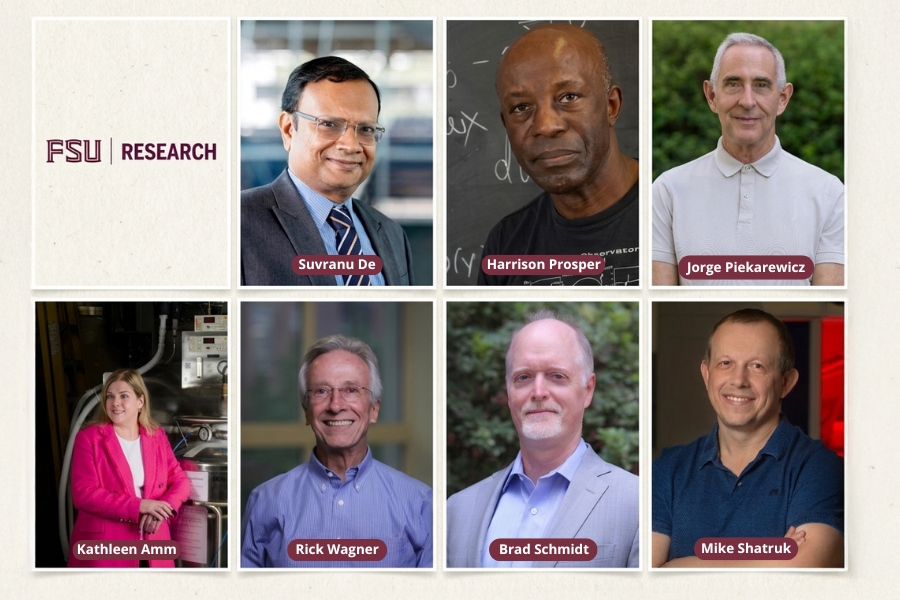
Mike is ASEMFL Member
May 2026
Seven FSU faculty members have been elected to the Academy of Science, Engineering and Medicine of Florida
Novo Nordisk Fellowship
February 2026
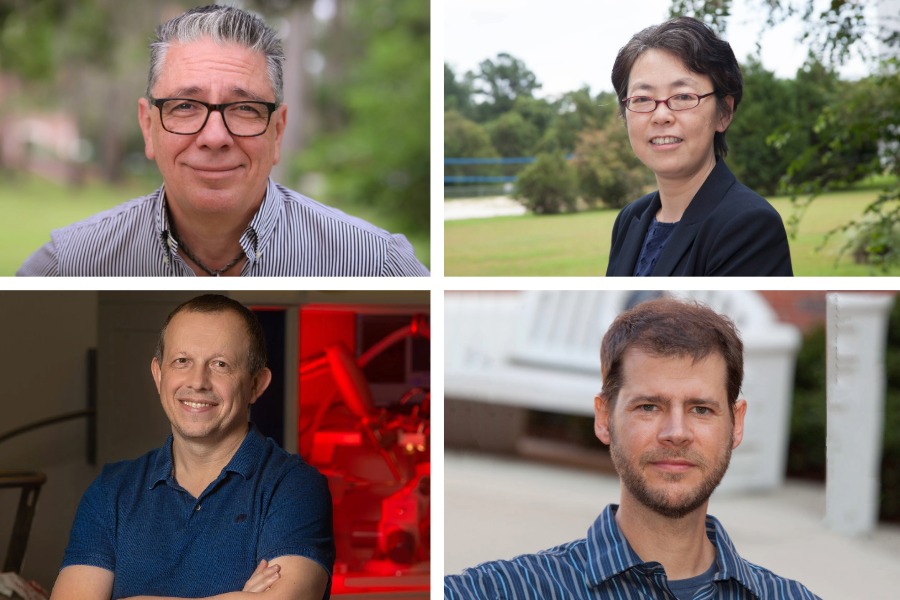
FSU chemist lands international fellowship to advance quantum materials
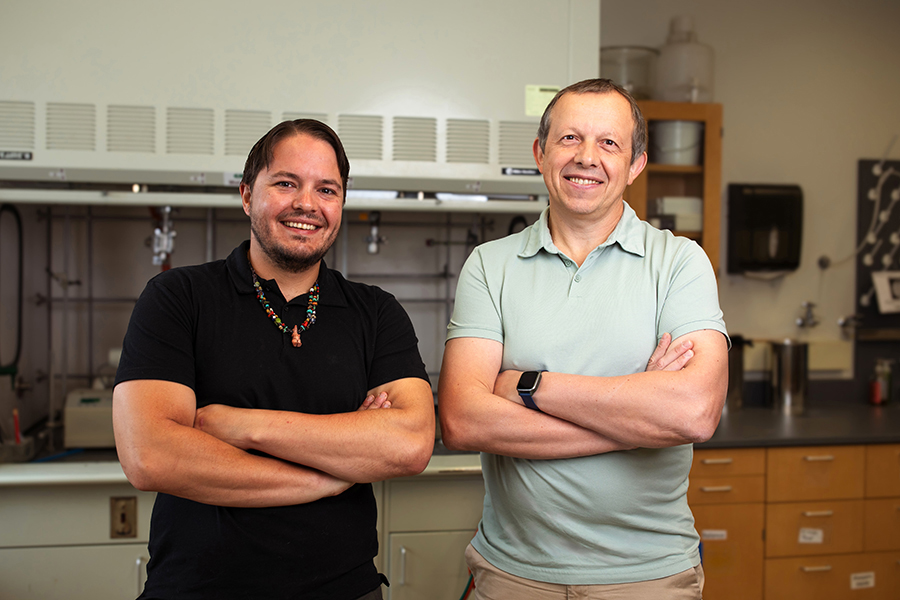
Twisting Spins
December 2025
FSU researchers explore chemical boundaries to create new magnetic material with exotic spin textures
Research Highlight
December 2024
FSU researchers develop new methods to generate and improve magnetism of 2D materials
RCC Spotlight
July 2024
Dr. Shatruk featured for the use of FSU computational resources to study electronic structures of materials
Mike is AAAS Fellow
April 2024
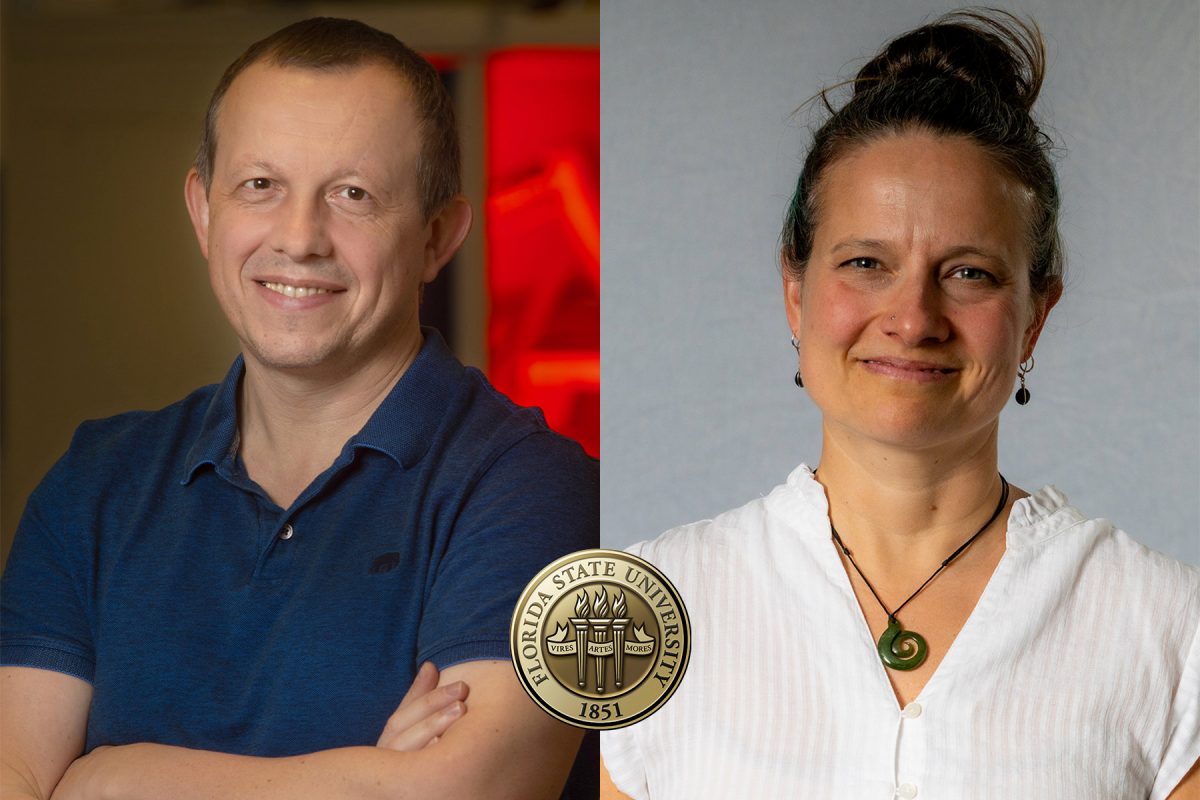
FSU Researchers named Fellows of the American Association for the Advancement of Science
Research Spotlight
March 2021
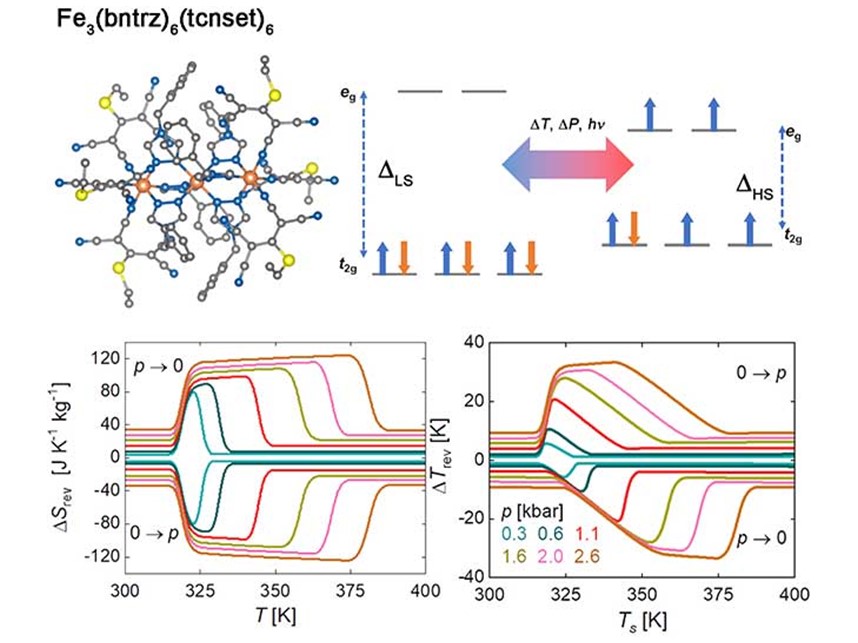
FSU researchers use pressure-sensitive molecular materials to harness cooling technology
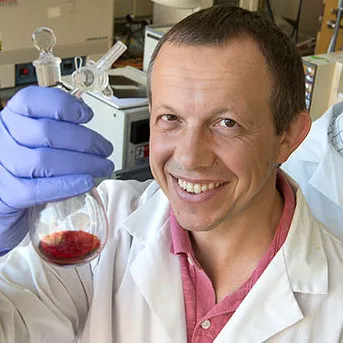
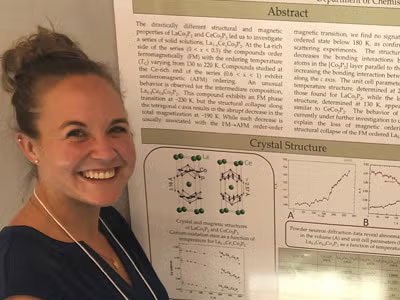
DOE Student Award
May 2020
Judy Clark has received the DOE Office of Science Graduate Student Research (SCGSR) Award to carry out research at Oak Ridge National Lab
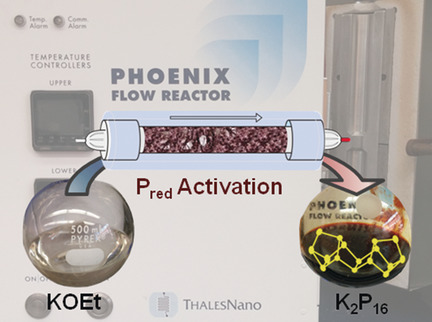
Red Wonder
March 2016
The Shatruk group discovers a way to safely activate red phosphorus, an elemental form that long was considered too inert to react under mild conditions
ACS ExxonMobil Award
February 2012
Mike has received the prestigious ExxonMobil Solid State Chemistry Faculty Fellowship from the ACS Division of Inorganic Chemistry for his work to develop new magnetic materials