Recent Alumni Highlights
Florida State / Alumni / Recent Alumni Highlights
Joshua Davis (Ph.D. 2026, Industry)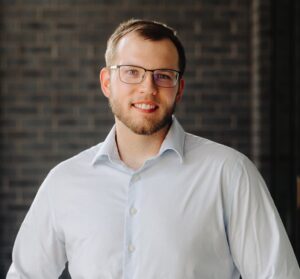
Joshua Davis joined the Department of Chemistry and Biochemistry at Florida State University in the fall of 2021 after earning his bachelor’s degree in Chemistry from Rowan University. As a member of the Roper Research Group, he developed LC-MS/MS methods for the simultaneous quantification of insulin, C-peptide, glucagon, and somatostatin using microfluidic perfusion systems and online analysis platforms to study hormone secretion dynamics from pancreatic islets. His work advanced the temporal resolution and analytical capabilities available for studying islet function and diabetes-related biology and has led to multiple peer-reviewed publications. During his graduate studies, Josh received several departmental and national honors, including the Eastman/ACS Analytical Summer Graduate Fellowship and the Johnsen Award for Excellence in Analytical Chemistry. After earning his Ph.D. in 2026, he joined Bristol Myers Squibb as a Scientist in Analytical Development, where he applies chromatography, mass spectrometry, and other advanced analytical techniques to support the development and characterization of pharmaceutical products. His work involves method development, analytical testing, and data analysis to advance drug development programs.
Dallas M. Dukes (Ph.D. 2026, Industry)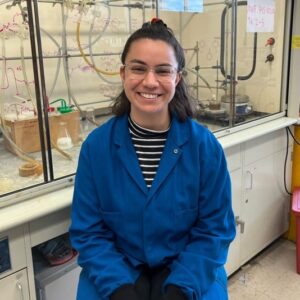
Dr. Dallas Dukes was a graduate student in the lab of Prof. Joel M. Smith from 2021-2026. His research focused on the synthesis of complex alkaloids utilizing exendo bond disconnections and redox economy as strategically guiding tenets. This work enabled her to have expertise in the realm of complex molecule construction that enables her as a process chemist at the large pharmaceutical company Sanofi SA in Cambridge, Massachusetts. During her time at FSU, she shared her research at several important conferences including the Empowering Women in Organic Chemistry (EWOC) Conference, the Natural Products Gordon Research Conference, and the Heterocycles Gordon Conference. Her ongoing research in the pharmaceutical industry is concerned with the scalable synthesis and production of various small molecule clinical candidates developed at Sanofi.
Neven Mikawy (Postdoc 2025, Industry)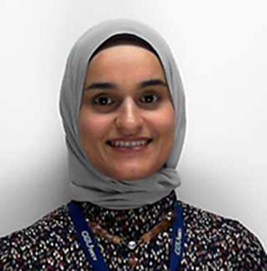
Dr. Neven Mikawy was a postdoctoral fellow in the group of Prof. Kristina Hakansson at the University of Michigan (UM) 2022-2024 and at the MagLab/FSU 2024-2025. Dr. Mikawy received her Ph.D in Pharmaceutical Analytical Chemistry from Ain Shams University in Cairo, Egypt in 2019 and worked as a lecturer at the same University until moving to the United States to pursue research in mass spectrometry. At UM she was involved in a collaboration with Agilent Technologies to decrease false discovery rates in top-down proteomics. Dr. Mikawy is the mom of two young daughters and spent her first year at UM as a sole parent while waiting for her husband’s visa. Following her move to the MagLab/FSU, Dr. Mikawy expanded her work in top-down proteomics to specifically focus on labile posttranslational modifications. Her expertise, including therapeutic antibody analysis, landed her a position as Senior Scientist at AbbVie in the Chicago area in May, 2025.
He Liu (Ph.D. 2024, Postdoc Academia)
Dr. He Liu was a graduate student in the Department of Chemistry & Biochemistry at Florida State University from 2019 to 2024, where she conducted her doctoral research under the supervision of Dr. Biwu Ma. Her research focused on the design and synthesis of novel luminescent materials and their applications in optoelectronic devices, with particular emphasis on metal halide perovskites and perovskite-inspired materials for light-emitting technologies. She is currently a Postdoctoral Research Scholar at North Carolina State University, where she leads multiple independent research projects focused on the development of next-generation luminescent materials for high-efficiency light-emitting diodes (LEDs) and advanced photonic applications.
Tunde Blessed Shonde (Ph.D. 2024, Industry)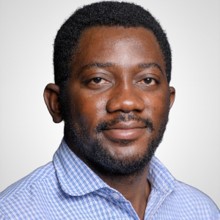
Tunde Blessed Shonde earned his Ph.D. in Materials Chemistry from Florida State University (FSU) in Spring 2024. His doctoral research focused on the design and development of novel organic–metal halide hybrid materials and concepts for high-energy radiation detection. Under the mentorship of Professor Biwu Ma, Dr. Shonde developed new low-dimensional organic–metal halide hybrids and metal complex materials, and introduced a novel molecular sensitization strategy for hybrid scintillators, advancing materials for radiation detection and emerging applications such as FLASH radiation therapy. In recognition of his outstanding scholarly achievements, he received the 2024 Graduate Student Research & Creativity Award. Dr. Shonde also served as President of the FSU–FAMU–TCC Chapter of the National Organization for the Professional Advancement of Black Chemists and Chemical Engineers (NOBCCHE). Following his Ph.D., Dr. Shonde served as a Visiting Assistant Professor at the University of West Florida. He is currently an R&D Scientist at BASF Corporation, where he focuses on the development of innovative fluid catalytic cracking catalysts for the refining industry, as well as scaling new catalyst formulations from laboratory research to commercial production
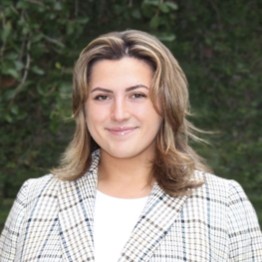
Ashley Arcidiacono (Ph.D. 2023, Academia)
After receiving her B.S. in Chemistry at Villanova University in 2018, Ashely began graduate school at FSU under the mentorship of Dr. Kenneth Hanson. Her research focused on understanding energy and electron transfer dynamics at molecule metal oxide surfaces. Her graduate work resulted in more than 15 publications with 5 being the first author. She also was awarded and co-chaired the ACS Graduate Student Symposium Planning Committee to organize a special symposium at the National ACS meeting. Her contributions were recognized with the Hoffman Research Fellowship, Wilder Endowed Scholarship, Rosenfield Travel Award, and FSU Graduate Student Research and Creativity Award. After receiving her Ph.D. From 2023 to 2026 she worked in the lab of Dr. Sarah King at the University of Chicago as a prestigious Arnold O. Beckman Postdoctoral Fellow probing ultrafast interfacial dynamics. In fall of 2026, Ashley started her independent career as an Assistant Professor at Lehigh University where her group explores how electron spin governs chemical reactivity and charge transfer at interfaces, using optical spectroscopy to uncover the structural and molecular origins of spin polarization.
Thiago A. Grigolo (Ph.D. 2023, Industry)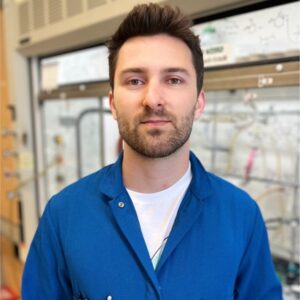
Dr. Thiago Grigolo was a graduate student in the lab of Prof. Joel M. Smith from 2019-2023. His research focused on the synthesis of complex alkaloid natural products through the regioselective and asymmetric dearomatization of pyridine heterocycles. This work enabled him to have expertise in the realm of heterocyclic chemistry that is central to his role as a medicinal chemist at the pharmaceutical company Nurix Therapeutics in Houston, Texas. During his time at FSU, he shared his research at several important conferences including the Natural Products Gordon Research Conference, the Reaction Mechanisms Conference, and the ACS Graduate Research Symposium. His ongoing research in the pharmaceutical industry is concerned with the development of novel PROTACs for cancer treatment.
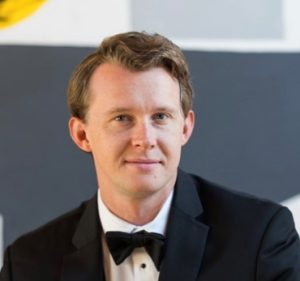
Wesley Eaton (Ph.D. 2021, Industry)
Dr. Wesley Eaton started his graduate work in the FSU Department of Chemistry and Biochemistry in 2016 and graduated with a Ph.D in analytical chemistry in December 2021. He was advised by Dr. Michael Roper and his research focused on the development of assay and microfluidic technology to interrogate cellular dynamics from pancreatic tissue. Specifically, he built optical systems for insulin monitoring and used a novel assay to quantify the hormone glucagon, which contributed towards improved understanding of blood glucose regulation. Following his thesis defense in November 2021, he accepted a postdoctoral fellowship at Abbott Laboratories in the Chicago area where he joined the Transfusion Medicine Division. In 2023, he was promoted to a permanent senior scientist within the team. His work at Abbott focuses on development of next generation assays to test for pathogens in blood donations, which will improve blood transfusion safety.
L. Anthony Saucedo (Ph.D. 2021, Industry)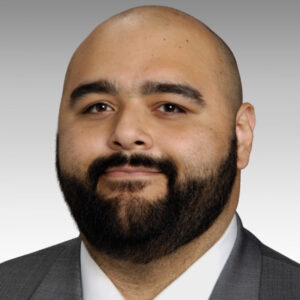
Dr. L. Anthony Saucedo was a graduate student and McKnight Doctoral Fellow at the Department of Chemistry & Biochemistry from 2016 to 2021. He was co-advised by Dr. Michael Shatruk and Dr. Geoffrey Strouse. His research focused on investigation of nanoscale approaches to improving the energy product of magnetic materials, in order to discover inexpensive, sustainable permanent magnets. Along these lines, he developed a method for synthesizing hard magnetic nanoparticles of Cu-doped mixed-valent iron selenide. He is currently a staff engineer at L3 Harris Technologies.
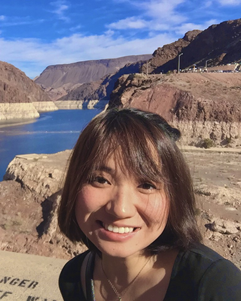
Yan Zhou (Ph.D. 2020, Industry)
Dr. Yan Zhou worked as graduate student at FSU from 2015 and 2020 under the supervision of Dr. Kenneth Hanson. Her research focused on the development of self-assembled multilayer light-harvesting structures for application in photovoltaics. She was able to increase broad-band absorption and understand the mechanism of photocurrent enhancement via a combination of spectroscopic techniques. Outside of the lab, Dr. Zhou was involved with FSU’s Graduate Women in Science—an organization that supported graduate women in pursuing careers in the sciences. During her time at FSU, Dr. Zhou was awarded the Graduate Student Research and Creativity Award by FSU’s Graduate School and the Philip Schlenoff Endowment for Excellence Graduate Student Travel Award. Post graduation, Dr. Zhou initially worked as a process engineer at Applied Materials, Inc. on plasma etching technology and more recently she took a position as a surface chemist at Thermo Fisher Scientific.
Qingquan He (Postdoc 2020, Academia)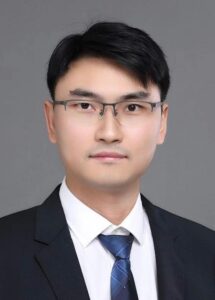
Dr. Qingquan He was a postdoctoral research fellow at Florida State University from 2018 to 2020 in Prof. Dr. Biwu Ma group. His postdoctoral research focused on defect passivation and interface engineering in perovskite solar cells, where he leveraged surface passivation techniques to tackle critical stability challenges. He returned to China in 2020 and joined the faculty at Zhejiang University of Technology the following year, where he is currently a professor in the Science and Education Integration College of Energy and Carbon Neutralization. His current research utilizes data-driven approaches to accelerate the development of core photovoltaic materials, with the ultimate goal of overcoming the lifetime bottlenecks of perovskite/silicon tandem solar cells.
Zachary Tener (Ph.D. 2020, National Lab)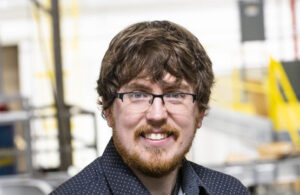
Dr. Zachary Tener was a graduate student at the Department of Chemistry & Biochemistry from 2015 to 2020. He worked under the guidance of Dr. Michael Shatruk to investigate correlations between the crystal and electronic structures and magnetic properties of transition metal germanides. In his research, Zach used extensively neutron scattering facilities at the Oak Ridge National Lab (ORNL) and published several papers elucidating magnetic structures of ternary and quaternary materials. After a 2-year postdoctoral stint at the ORNL, he joined the Savannah River National Lab as a staff scientist.
Liang-Jin Xu (Postdoc 2020, Academia)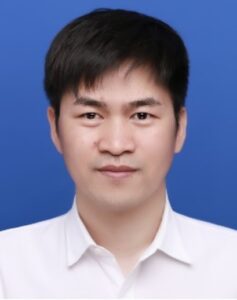
Dr. Liang-Jin Xu was a postdoctoral fellow in the Department of Chemistry and Biochemistry at Florida State University (FSU) from 2018 to 2020, working in the research group of Dr. Biwu Ma. During his time at FSU, he contributed to several research projects, including the fabrication of perovskite light-emitting diodes (PeLEDs), pioneering studies on metal-halide-based scintillators, and investigations into the persistent luminescence (afterglow) properties of metal halide materials. In 2021, he joined the Fujian Institute of Research on the Structure of Matter, Chinese Academy of Sciences, as a Full Professor, and was promoted to Principal Investigator in 2026. His independent research focuses on the design and synthesis of metal cluster complexes, perovskites, and organic–inorganic hybrid materials, as well as the investigation of their photophysical and optoelectronic properties. His work further explores their applications in advanced optoelectronic devices, including light-emitting diodes (LEDs), organic light-emitting diodes (OLEDs), scintillators, circularly polarized luminescence (CPL), and circularly polarized electroluminescence (CPEL).
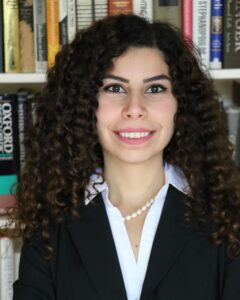
Mayassa J. Bou-Dargham (Ph.D. 2019, Postdoc Academia)
Dr. Mayassa Bou-Dargham was a graduate student at the Department of Chemistry & Biochemistry from 2014-2019. She as co-advised by Dr. Qing Xiang Amy Sang in Chemistry and Biochemistry and Dr. Jinfeng Zhang in the Department of Statistics. Her research focused on studying the different immune evasion mechanisms in human cancers including somatic mutations in medulloblastoma, and epithelial to mesenchymal transition in androgen-repressed prostate cancer. Dr. Bou-Dargham also collaborated with Prof. Yan Li at the Department of Chemical and Biomedical Engineering to study the effect of iron oxide nanoparticles on induced pluripotent stem cell-derived brain organoids. Her research resulted in a provisional patent application, and more than eight published research papers. She is currently a postdoctoral researcher at the Perelman School of Medicine at University of Pennsylvania with Prof. Warren Pear, where her research focuses on studying myeloid cell development and function under homeostatic and disease conditions.
Minyoung Jo (Ph.D. 2019, Industry)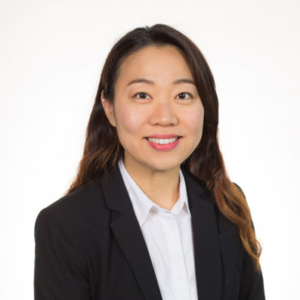
Dr. Minyoung Jo was a graduate student at the Department of Chemistry & Biochemistry from 2013 to 2019. She was co-advised by Dr. Tyler McQuade and Dr. Michael Shatruk. Her research focused on investigation of N-heterocyclic carbenes and their utility for the synthesis of metal complexes, as well as on the development of solution chemistry of polyphosphide anions. Her research resulted in a several impactful publications in journals dedicated to both organic and inorganic chemistry. She is currently a Deputy Director for the UP Chemical Company in South Korea, focusing on the production of industry-relevant semiconductor materials.
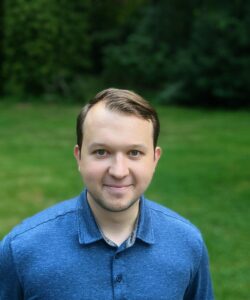
Nikita Mukhitov (Ph.D. 2017, Industry)
Nikita Mukhitov joined the Department of Chemistry & Biochemistry at FSU in the fall of 2013 after obtaining his BS Biochemistry at Trinity University in San Antonio. Nick joined the Roper laboratory in January 2014 and performed a number of different projects in his time at FSU, including working on microfluidic systems to facilitate automated electron microscopy sample preparation, and was instrumental in developing assays to measure insulin and glucagon levels from islets of Langerhans. He also investigated transcriptional profiles in groups of islets exposed to oscillatory glucose levels. During his time at FSU, he was awarded a Hoffman fellowship and a Predoctoral Fellowship from the American Heart Association. In the fall of 2017, he graduated with his PhD and went on to work in the Voigt Laboratory at MIT in the Synthetic Biology Center. His work there included genetically engineering probiotic bacteria to produce antimicrobial compounds. He is now a Senior Scientist at Merck in Discovery Biologics. He is developing high-throughput robotic platforms for producing therapeutic proteins, with work spanning protein engineering, molecular biology, expression and purification, and informatics work.
Xiaoyan Tan (Ph.D. 2017, Academia)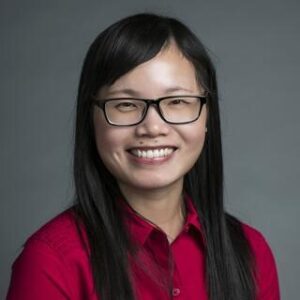
Dr. Xiaoyan Tan was a graduate student at the Department of Chemistry & Biochemistry from 2012 to 2017. She was co-advised by Dr. Michael Shatruk from FSU and Dr. Ovidiu Garlea from the Oak Ridge National Lab (ORNL). Her research focused on investigation structure-property correlations in intermetallic magnetic materials. Her PhD work resulted in 14 publications, including two publications in JACS and a review in Accounts of Chemical Research. For such remarkable and impactful research output, she received the FSU Graduate Student Research and Creativity Award. After postdoctoral training with Dr. Martha Greenblatt at Rutgers University, Xiaoyan began her independent career at George Mason University, where she is currently an Associate Professor in the Department of Chemistry & Biochemistry.