Recent Alumni Highlights
Florida State / Alumni / Recent Alumni Highlights
Neven Mikawy (Postdoc 2025, Industry)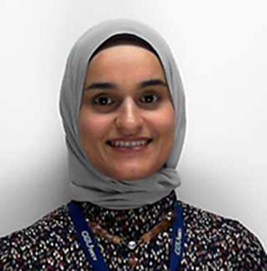
Dr. Neven Mikawy was a postdoctoral fellow in the group of Prof. Kristina Hakansson at the University of Michigan (UM) 2022-2024 and at the MagLab/FSU 2024-2025. Dr. Mikawy received her Ph.D in Pharmaceutical Analytical Chemistry from Ain Shams University in Cairo, Egypt in 2019 and worked as a lecturer at the same University until moving to the United States to pursue research in mass spectrometry. At UM she was involved in a collaboration with Agilent Technologies to decrease false discovery rates in top-down proteomics. Dr. Mikawy is the mom of two young daughters and spent her first year at UM as a sole parent while waiting for her husband’s visa. Following her move to the MagLab/FSU, Dr. Mikawy expanded her work in top-down proteomics to specifically focus on labile posttranslational modifications. Her expertise, including therapeutic antibody analysis, landed her a position as Senior Scientist at AbbVie in the Chicago area in May, 2025.
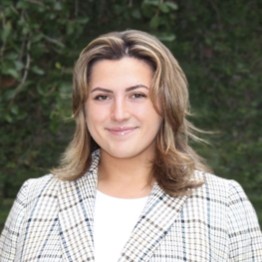
Ashley Arcidiacono (Ph.D. 2023, Beckman Postdoc Fellow, Academia)
After receiving her B.S. in Chemistry at Villanova University in 2018, Ashely began graduate school at FSU under the mentorship of Dr. Kenneth Hanson. Her research focused on understanding energy and electron transfer dynamics at molecule metal oxide surfaces. Her graduate work resulted in more than 15 publications with 5 being the first author. She also was awarded and co-chaired the ACS Graduate Student Symposium Planning Committee to organize a special symposium at the National ACS meeting. Her contributions were recognized with the Hoffman Research Fellowship, Wilder Endowed Scholarship, Rosenfield Travel Award, and FSU Graduate Student Research and Creativity Award. After receiving her Ph.D. in May 2023, she joined the lab of Dr. Sarah King at the University of Chicago as a prestigious Arnold O. Beckman Postdoctoral Fellow. In the King lab her work focuses on probing ultrafast interfacial dynamics and constructing novel architectures for the controlled communication of electron spin at hybrid interfaces.
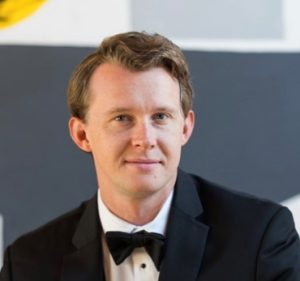
Wesley Eaton (Ph.D. 2021, Industry)
Dr. Wesley Eaton started his graduate work in the FSU Department of Chemistry and Biochemistry in 2016 and graduated with a Ph.D in analytical chemistry in December 2021. He was advised by Dr. Michael Roper and his research focused on the development of assay and microfluidic technology to interrogate cellular dynamics from pancreatic tissue. Specifically, he built optical systems for insulin monitoring and used a novel assay to quantify the hormone glucagon, which contributed towards improved understanding of blood glucose regulation. Following his thesis defense in November 2021, he accepted a postdoctoral fellowship at Abbott Laboratories in the Chicago area where he joined the Transfusion Medicine Division. In 2023, he was promoted to a permanent senior scientist within the team. His work at Abbott focuses on development of next generation assays to test for pathogens in blood donations, which will improve blood transfusion safety.
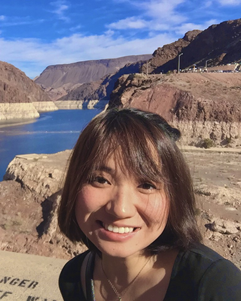
Yan Zhou (Ph.D. 2020, Industry)
Dr. Yan Zhou worked as graduate student at FSU from 2015 and 2020 under the supervision of Dr. Kenneth Hanson. Her research focused on the development of self-assembled multilayer light-harvesting structures for application in photovoltaics. She was able to increase broad-band absorption and understand the mechanism of photocurrent enhancement via a combination of spectroscopic techniques. Outside of the lab, Dr. Zhou was involved with FSU’s Graduate Women in Science—an organization that supported graduate women in pursuing careers in the sciences. During her time at FSU, Dr. Zhou was awarded the Graduate Student Research and Creativity Award by FSU’s Graduate School and the Philip Schlenoff Endowment for Excellence Graduate Student Travel Award. Post graduation, Dr. Zhou initially worked as a process engineer at Applied Materials, Inc. on plasma etching technology and more recently she took a position as a surface chemist at Thermo Fisher Scientific.
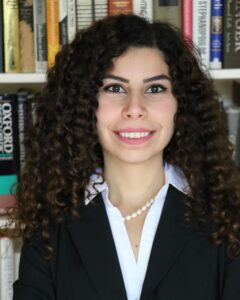
Mayassa J. Bou-Dargham (Ph.D. 2019, Postdoc Academia)
Dr. Mayassa Bou-Dargham was a graduate student at the Department of Chemistry & Biochemistry from 2014-2019. She as co-advised by Dr. Qing Xiang Amy Sang in Chemistry and Biochemistry and Dr. Jinfeng Zhang in the Department of Statistics. Her research focused on studying the different immune evasion mechanisms in human cancers including somatic mutations in medulloblastoma, and epithelial to mesenchymal transition in androgen-repressed prostate cancer. Dr. Bou-Dargham also collaborated with Prof. Yan Li at the Department of Chemical and Biomedical Engineering to study the effect of iron oxide nanoparticles on induced pluripotent stem cell-derived brain organoids. Her research resulted in a provisional patent application, and more than eight published research papers. She is currently a postdoctoral researcher at the Perelman School of Medicine at University of Pennsylvania with Prof. Warren Pear, where her research focuses on studying myeloid cell development and function under homeostatic and disease conditions.
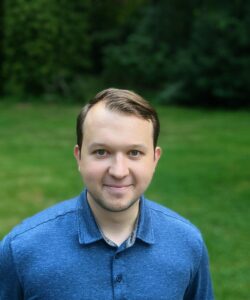
Nikita Mukhitov (Ph.D. 2017, Industry)
Nikita Mukhitov joined the Department of Chemistry & Biochemistry at FSU in the fall of 2013 after obtaining his BS Biochemistry at Trinity University in San Antonio. Nick joined the Roper laboratory in January 2014 and performed a number of different projects in his time at FSU, including working on microfluidic systems to facilitate automated electron microscopy sample preparation, and was instrumental in developing assays to measure insulin and glucagon levels from islets of Langerhans. He also investigated transcriptional profiles in groups of islets exposed to oscillatory glucose levels. During his time at FSU, he was awarded a Hoffman fellowship and a Predoctoral Fellowship from the American Heart Association. In the fall of 2017, he graduated with his PhD and went on to work in the Voigt Laboratory at MIT in the Synthetic Biology Center. His work there included genetically engineering probiotic bacteria to produce antimicrobial compounds. He is now a Senior Scientist at Merck in Discovery Biologics. He is developing high-throughput robotic platforms for producing therapeutic proteins, with work spanning protein engineering, molecular biology, expression and purification, and informatics work.
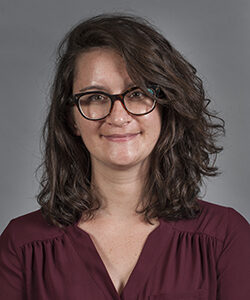
Ashley Longstreet (Ph.D. 2015, Academia)
Dr. Ashley Longstreet was a graduate student at FSU from 2010-2015 and worked under the supervision of Prof. D. Tyler McQuade. Her research focused on developing a streamlined synthesis for nevirapine, an antiviral for HIV, and ylidenemalononitrile enamine fluorescent sensors. After being a NIH Ruth L. Kirschstein Postdoctoral Fellow at MIT with Prof. Timothy F. Jamison, she began her independent career in 2017 in the Department of Chemistry at The University of Tampa. Her current research focuses of using carbazole derivatives as inexpensive and metal-free redox catalysts for organic transformations.
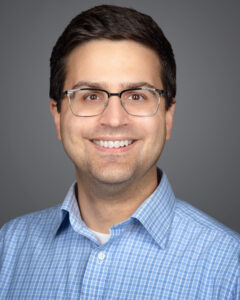
Paul Stewart (Ph.D. 2014, Academia)
Dr. Paul Stewart was a Ph.D. student at FSU from 2009 to 2014 in the lab of Dr. Qing-Xiang Amy Sang. His dissertation research focused on proteomic and bioinformatic approaches for characterizing castration-resistant prostate cancer. After leaving FSU in 2014, Dr. Stewart joined the Moffitt Cancer Center in Tampa, Florida as a postdoctoral fellow in the lab of Eric Haura, MD. In 2017, he was promoted to staff scientist in Dr. Haura’s lab; and in 2021, he joined Moffitt’s Department of Biostatistics and Bioinformatics as a tenure track faculty. His independent research incorporates data science and development of novel computational tools for processing, analyzing, and interpreting mass spectrometry and multi-omics data.
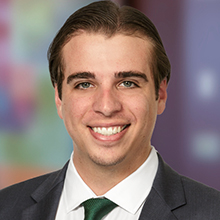 Joseph Bowler (Ph.D. 2014, Patent Law)
Dr. Joseph Bowler was a graduate student at FSU from 2009-2014 with Prof. Brian Miller, where he investigated the mechanism of small-molecule activation of an enzyme implicated in the pathogenesis of diabetes. He also developed an in vivo screening method that integrated a plasmid-based library with a genetic selection system to identify novel therapeutic compounds. Joseph’s doctoral work resulted in several publications in research journals, including Nature Chemistry and Proceedings of the National Academy of Sciences. Dr. Bowler now serves as a patent agent for Wolf-Greenfield Law Firm in Boston, MA where he assists in patent prosecution in the biotechnology space, primarily in the areas of next-generation sequencing, antisense therapy, and recombination protein technologies.